Showing posts with label harmison. Show all posts

Saturday, 8 August 2009

Harmison: the new Hick

Day 1 - Close


Rarely have an England team put in as dismal a performance as today. In less than two sessions they played themselves out of the game and possibly the chance of regaining the Ashes.

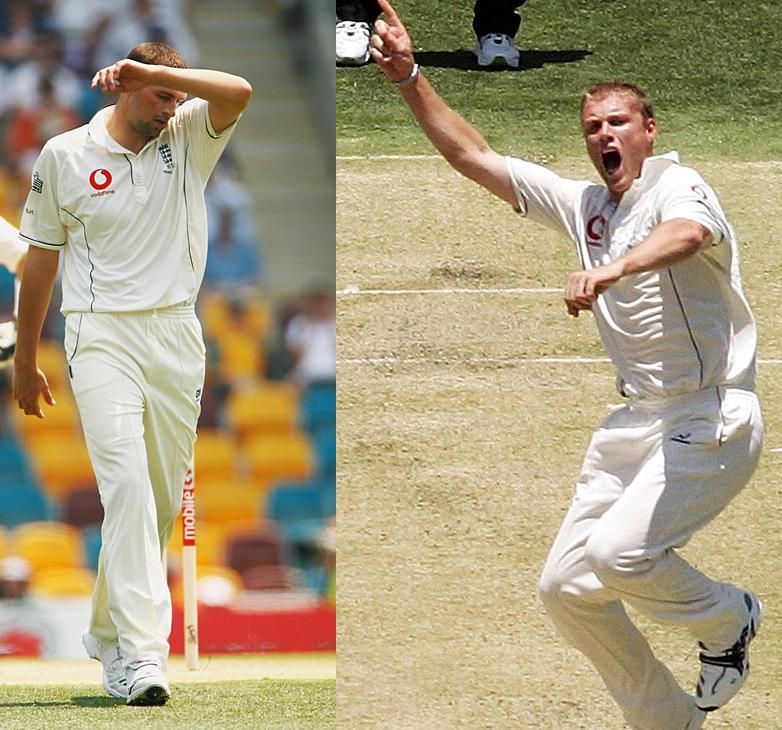
It was a throwback to the worst days of the 90s, not just in the scorebook but also because a talented discard had returned. Steve Harmison’s comeback was imbued with the same unreasonable expectation and resigned inevitability that accompanied Graeme Hick’s periodical returns into Test cricket.

Both men are remarkably similar: towering, touted, gifted and ultimately too insecure for Test cricket. The English obsession with Hick through the 90s was symptomatic of their lack of world-class batsmen and the preoccupation with Harmison today is born out of the same problem with the bowlers. B
urdened with the ‘great white' hopes of a nation, perhaps the pressure was too much for such fragile temperaments. It seemed the English selectors thought so as Harmison was left out all series.

But, like Hick, he got better with every Test he didn’t play. Thundering the shires, he was just too good to be ignored. And so, like that failed relationship, we gave it ‘one more go’ before, predictably, swearing never to do so again.

Thursday, 14 December 2006

Perth's lift raises England's spirits

Third Test, Perth
Day 1 Comment

The plaudits will go to Panesar but the real hero today was Cameron Sutherland - the head groundsman at the WACA. This series so far has, inevitably, failed to live up the hype that preceded it. Injuries and and a desperately defensive approach from England have played thier part but primarily it is because the first two tests were played on slow, low, boring featherbeds.

It was promised before this test that the once lethally quick Perth wicket had lost its venom and become yet another Australian batsmen's paradise. Thankfully for everyone, the pitch had carry, some pace and occasionally some seam movement. As a result batters could play through the line and on the up, yielding exciting results. Bowlers could run in with purpose knowing, if they bend their back, the pitch won’t ignore them. It produced an exhilarating days cricket.

England, strangely, found themselves free of their self-imposed shackles. With nothing to lose they decided, finally, to play their most attacking side. Ashley Giles made way for Monty Panesar and Jimmy Anderson for Sajid Mahmood.

The approach of both sides was different to the previous tests. Australia, just a game away from the Ashes, set out to dominate and crush what they sensed was a vulnerable England team. Hayden, who had spoken bullishly about his plans to go after Hoggard was initially aggressive, but ultimately too frantic as he was found out for the sixth time by Hoggard’s nagging accuracy and cunning.

England, as is their sporting heritage, revelled in their backs-to-the-wall position and came out firing. Somehow, Stephen Harmison managed to produce a quick straight ball that defeated the Australian captain. Wickets fell steadily through the day but all the while Mr Cricket was quietly counter-attacking, repeatedly stroking the ball to the cover boundary. The best passage of play was a classic battle between Monty Panesar and Andrew Symonds. Both players were recalled to the side but for Symonds this was last chance saloon. A towering figure and world-beating one-day player, he had yet to make his mark on the test arena. At 31, he won't be given many more chances. He had promised everybody and himself that he would go out and play his natural, destructive game. It was the power of the bludgeoner versus the delicate variations of finger spinner. After a couple of watchful overs he launched Panesar for two towering sixes and a four in an over. It’s the first time that Monty has been genuinely attacked in his career and it left Flintoff with a difficult choice of whether to persist with Panesar. Bravely he kept Monty on, and in his next over, he had Symonds caught behind. It is this sort of aggressive, attractive cricket where both sides are at their best, and is what fans have been craving for all series.

In the end, England probably edged the day, but the two late wickets left Australia on a high and as is always the case, the first hour tomorrow will be crucial.

Monday, 27 November 2006

Seven steps to fight back in Adelaide

First Test, Brisbane
Day 5 Comment

Australia reaffirmed their dominance by quickly dashing any hopes of a batting miracle this morning, leaving England with very little to take from this game into Friday’s crucial second test.

Now if this Ashes series is to really take off, England have to win in Adelaide. The result is even more significant than the first test. And England might find that the sense of occasion – though immense – will be less fraught then it was in Brisbane.

It’s a familiar situation for England and they know what needs to be done. The question is whether Flintoff can convince his men that they can do it; that they are capable of formulating a strategy that will press the Australians, and ultimately force a win in Adelaide.

As a guide to the psychological feeling England should be adopting here, let’s be introspective for a moment. I know how much I care about the England performance. I dream, analyse and despair over each ball in every test. So, look at yourself honestly. Do you believe England can come back?

I know I do, and here’s how.

1. Pick Panesar. It’s attractive to delude yourself into thinking that the mighty Monty would have made all the difference at Brisbane. He wouldn’t have. But he gives England control and an attacking option during those long Kookaburra 20-80 ‘middle’ overs. Anderson, though bowling well at times, was too inconsistent for a batting line-up of Australia’s stature. Monty should replace him at 11.

2. Win the toss. You could argue that one shouldn’t plan for things that are out of our control, but Harmy’s radar is beyond anyone’s control and yet we still plan around that.

3. Needless to say it, but bat, bat and bat. This means that Strauss will actually have to play himself in before trying to clear the world’s biggest boundaries with his almighty hook.

4. Open the bowling with Freddie. I have banged on about this for the last three days. Give your strongest bowlers the best possible chance with the new ball. It is for the same reasons that Australia prefers McGrath over Hussey with the new ball.

5. Think 2005 not 95. England are Ashes winners. They are a bunch of aggressive, gifted and tough players who thrive on playing attacking cricket. Through much of this test, England’s body language in the field was meek, lethargic and purposeless. On flat pitches, fielding sides have to work doubly hard to create pressure. This means disciplined fast bowling with occasional short balls that reach neck height, not regular waist-high long-hops.

6. Play on the opponent’s pressure. Australia had a 100-day countdown to this series. They have been subjected to boot camps and at Brisbane resorted to dispersing the Barmy Army around the ground and sending their trumpeter packing. They are obsessed. Their desire is feverish. Ponting almost threw a Trent Bridge-esque fit when dismissed for 196 and when Stuart Clark dropped Pietersen on the third day, he received withering glares and was ignored by his teammates. Australia has put themselves under huge pressure to reclaim the urn. If England could sustain a period of dominance and scare them; the Australian players, media and supporters have the potential to explode.

7. And finally, the elephant in the room, Stephen James Harmison. It is unfair of us to project our dreams on to him, but many have. He has to play at Adelaide, but must not become the distraction he did at Brisbane. If he’s not firing, use him as a middle over stock bowler. Set the field back and let him toil away for few runs. In Brisbane England wasted time and energy trying to get him right. Sky Sports spent more than two days demonstrating their split screen analysis of his bowling action. Every paper has put in their two-cents worth. It’s all a distraction. For now he should accept Dennis Lillee’s offer for a few coaching sessions. Lillee is the finest fast bowling coach in the world and a mentor to Troy Cooley, the coach who took England to Ashes success before switching sides. Now that nothing is expected of him, Harmison may roar in and win England the Second Test. But if he doesn´t, lets not spend five days talking about it.

The first test has been the worst of starts for England, yet they and the Aussies know that this series is far from over. Bring on round two.

Friday, 24 November 2006

In the battle of minds, Flintoff holds the key

First Test, Brisbane
Day 2 Comment
If you ever needed proof that much of test cricket is played in the head, look no further than England’s two strike bowlers. Flintoff and Harmison have all the potential to be world-beating quicks. Both have abilities to make a decisive impact on this series. But while Flintoff is revelling in carrying his side, Harmison is struggling with himself.

So much of Ashes cricket is about stamping authority on the opponents, thriving on the contest and dealing with confrontation. Harmison’s struggles are continued fuel for debate but it has been clear all tour that he is desperately low on confidence. Flintoff meanwhile is a different being. His strength of mind shows in the way he charged-in to Australia's batsman all day. Questions of confidence have never entered the equation. Yet Flintoff has bowled far less in the last six months than his Durham peer.

Looking back on this test match – which is all but decided now – many will cite that infamous first ball on Thursday. If the statement had to be made in that first over of the series, surely Flintoff was the man to do so. To play on a ground where Australia have always been dominant, and to take it upon himself to launch the Ashes would have been the best way for England - and Flintoff - to stamp authority on this series. Instead they opted for somone desperately short of match practise and vulnerable to gremlins when the chips are down.

It was a horrendous error of judgement that exposes the muddled thinking among England’s backroom staff. While we were driven to distraction about England's potential lower order batting woes, there has been failure to recognise that with so many bowlers coming back from injuries and lengthy layoffs, it is not the batting that needs propping up, it is the bowling.

What are these extra 30 runs that Giles is capable of providing down the order worth, when the opposition has amassed 602-9 declared? Giles toiled away admirably, bowling the dependable dross that has lent him a fantastic career. But what would Flintoff have given for the attacking and controlling presence of last summer’s highest wicket taker? Leaving Monty Panesar watching on helplessly from the dressing room, while Pietersen turned the ball is a decision that Fletcher will regret.

Hindsight is a curse for decision-makers, but a gift for commentators. Looking ahead, any chance for salvaging a result from this test ended yesterday evening when Strauss ended up pulling thoughtlessly down deep square leg. Now it it is essential for England to regain ground in the psychological battle. Bell must replicate the classy authority he showed this summer against Pakistan in the cauldron of Ashes pressure. Pietersen must show his resolve to stay at the crease long after Australia’s fiery spells of the opening session. Keeping the aging McGrath in the field for two days will do England’s chances no harm for next week’s second test.

England must prove to Australia – and perhaps themselves – that they are capable of taking this Ashes challenge head-on and coming out on top. If not for this test, than for the sake of the series.